The Water Line Splitting Head of the Harbor's Real Estate Market
August 13, 2026
August 13, 2026
Two colonials a quarter mile apart on the same stretch of road in Head of the Harbor can close under two different sets of rules. One sits on a street where Suffolk County Water Authority has already run new main. The other still draws from a well that predates the paperwork. The water source and connection status are details to confirm for each home, and the difference changes who pays for what, how long the deal takes, and what happens if a test comes back wrong.
Water and septic infrastructure are relevant context for Head of the Harbor's real estate figures this year, alongside the median price.
Head of the Harbor was built on groundwater. The village's own waterfront planning documents, filed with New York State, describe a place where shallow wells and surface springs supplied the whole community for most of its history, with a water table so high that springs surface naturally in places. That worked for generations of large lots and low density. Suffolk County Water Authority has been physically rebuilding water infrastructure inside the village since at least 2025.
This isn't ancient history. It's happening on a schedule right now.
In 2025, Suffolk County Water Authority began replacing roughly 2,800 feet of aging water main with new ductile iron pipe on Moriches Road, Fifty Acre Road, Cordwood Path, and the streets around them. That work continued into a new phase this summer. According to the Village of Head of the Harbor's own government site, SCWA began installing additional water mains on Rhododendron Road, Saddle Road, Birch Lane, and Oak Road starting June 29, 2026, and closed the Saddle Road and Main Street intersection for two full days, July 27 and 28, to complete the connection.
If you're comparing homes on those specific streets, the practical question isn't whether the village has public water in general. It's whether your particular block has been reached yet, and whether the seller can tell you that with certainty.
Here's where it gets expensive for whoever is buying a well-served home. Suffolk County's own code is direct about it: no residential purchase served by a private water system can close in the county until the buyer has obtained a certification from an approved lab, "at his or her own cost and expense," confirming the well meets the county's water quality standard. Not the seller. The buyer, before closing, out of pocket.
The legislature's stated reason for the law is worth knowing too. When it adopted the rule, Suffolk's legislature pointed to industrial activity, pesticide use, and groundwater contamination tied in part to Brookhaven National Laboratory, and cited an estimated 60,000 to 80,000 homes countywide running on private wells at the time. Head of the Harbor is one of the villages still counted in that group.
That structure is unusual compared to how neighboring counties handle the identical situation:
| County | When the test is required | Who orders and pays |
|---|---|---|
| Westchester | Certified Water Labs reports that the test is required at signing of the contract of sale | Buyer, with the county's own health department estimating average cost between $400 and $450 |
| Suffolk | Before the sale can close | Buyer, at the buyer's own cost, per county code |
| Rockland | At signing of the contract of sale | Seller, who arranges and pays |
Suffolk requires a buyer-paid test before closing, while Westchester requires one at signing and Rockland assigns the testing cost to the seller. If the well fails, the buyer has 15 days to notify the seller, who can then choose to fix the problem or cancel the contract and return the deposit. The only way around any of it is an explicit written waiver signed by both parties in the contract itself, and the county is careful to note that a waiver is not the county vouching for the water.
These water and septic details are worth confirming before an offer is accepted and should be reviewed in the contract.
Wells rarely travel alone in a village like this one. Homes that were never connected to public water were also generally never connected to a sewer main, which means many older Head of the Harbor properties still run on septic systems or cesspools. Suffolk County's regulatory approach to those systems changed substantially starting in 2019, as Long Island Sewer and Water Main explains, and licensed septic contractors serving the village now generally recommend pumping every three to five years and keeping documentation on hand, rather than relying on a verbal assurance that the system has been cared for.
A seller with pumping records in hand moves through this cleanly. A seller without them is often negotiating a price reduction or a delay while a contractor confirms the tank's condition, on top of whatever the well certification is already costing the buyer.
As of June 2026, different national data providers placed Head of the Harbor's typical home value anywhere from roughly $1.09 million to $1.6 million, and estimated typical time on market anywhere from about 130 days to 245 days, in the same month. That's an unusually wide spread for one small village of roughly three square miles.
The spread itself is useful context. A market where every comparable house trades on the same terms produces numbers that agree with each other. In Head of the Harbor, buyers may encounter homes on wells with buyer-funded certification requirements, homes connected to SCWA main, and homes with septic systems and differing maintenance histories. These details are part of ordinary property-specific due diligence, alongside price and time-on-market figures.
Asking these before you're under contract, not after, is the difference between a clean 30-day close and a negotiation that reopens itself in the third week.
Does every home in Head of the Harbor still use a private well? No. SCWA's ongoing main replacement means parts of the village, including sections of Moriches Road, Fifty Acre Road, Cordwood Path, Rhododendron Road, Saddle Road, Birch Lane, and Oak Road, have had recent water infrastructure work. Other streets have not yet been reached. It varies block by block.
Can a buyer skip the well certification to speed things up? Only if both the buyer and seller sign an explicit waiver written into the contract of sale itself. Suffolk County is specific that a waiver is not the same as the county confirming the water is safe.
Who typically pays for well testing in Suffolk County? The buyer, by county code, at the buyer's own cost, and the certification is exchanged with the seller at closing.
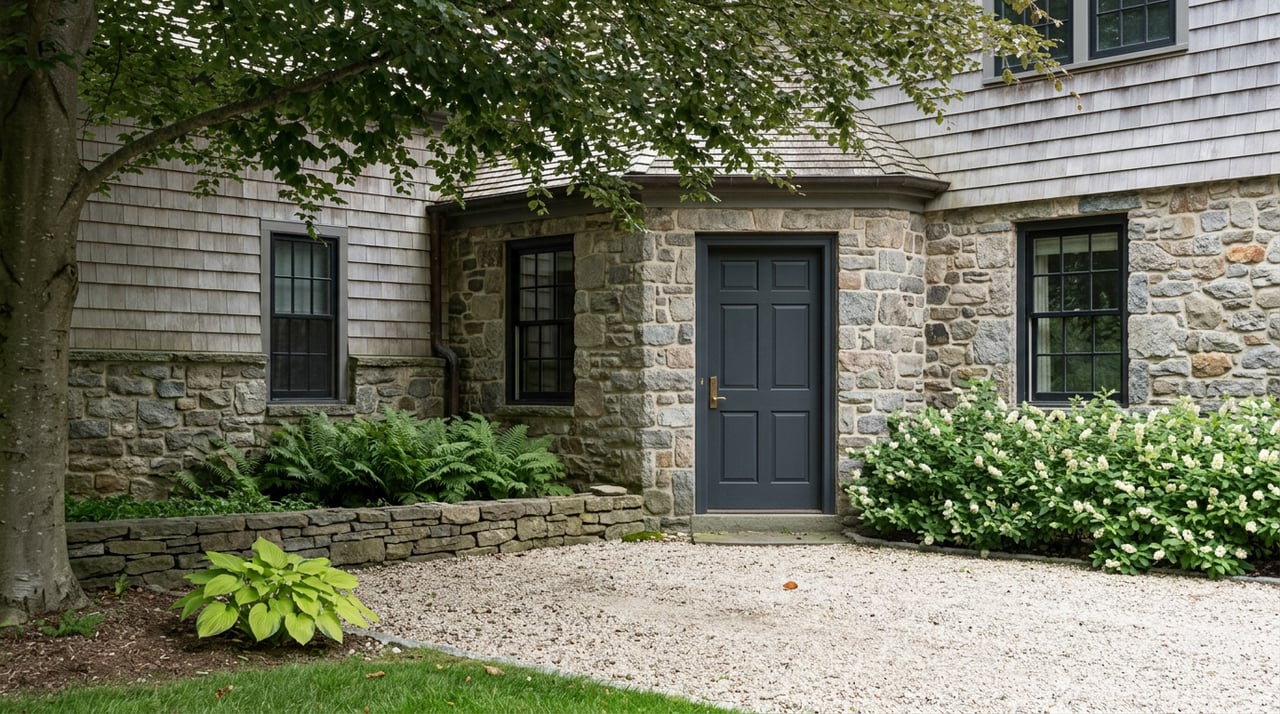
Head of the Harbor's scenic waterfront on Stony Brook Harbor, winding roads, and low density are part of its appeal. Its homes also vary in their water and septic arrangements, making property-specific due diligence part of evaluating a home.
If you're comparing Head of the Harbor to other North Shore villages and want a straight answer about a specific street's water and septic status before you write an offer, Kenny Calderon and Team Calderon can walk the parcel history with you and put together a free home valuation that accounts for what's actually under the ground, not just what's listed above it.
This article is general information, not legal, tax or financial advice. Consult a qualified professional about your situation.
Stay up to date on the latest real estate trends.


We pride ourselves in providing personalized solutions that bring our clients closer to their dream properties and enhance their long-term wealth.