The $130 Million Reason Melville's Median Price Won't Mean What It Used To
September 24, 2026
September 24, 2026
Ask three different listing platforms for Melville's median home price this year and you'll get three different answers depending on the month. One trailing 12-month snapshot from April 2026 put it at $950,000. A citywide figure from this past July landed just above $1,024,000, down slightly from the year before. An August 2026 asking-price snapshot showed $1.09 million. None of these sources are wrong exactly. They're measuring a market that is quietly becoming two markets, and the reason has almost nothing to do with how many people want to buy a house in Melville.
It has to do with how many people don't want to lease office space there anymore.
On April 14, 2026, the Huntington Town Board voted 4 to 1 to grant a special use permit for a project called Melville Crossing, a $130 million redevelopment of 75 Maxess Road. The site is 16.6 acres currently occupied by a 170,000 square foot office and industrial building. The developer, Steel Equities, plans to tear it down and replace it with roughly 400 residential units: 290 rental apartments, 40 of which are live-work units, plus 110 condominiums, alongside 37,300 square feet of retail and food space and a 6,300 square foot clubhouse. Councilwoman Brooke Lupinacci cast the lone no vote, saying she wanted more clarity before signing off. The site had previously been floated for an Amazon warehouse before that plan fell apart.
If you don't live in Melville or drive Route 110 for work, none of this probably crossed your radar. But if you're comparing Melville to another Long Island hamlet right now, it should, because it changes what "Melville" means as a housing market over the next several years.
The town didn't approve Melville Crossing because Melville needed more rooftops. It approved it because the office buildings along Maxess Road, Melville Park Road, Baylis Road, and Corporate Center Drive were emptying out, and empty office buildings are a tax problem before they're anything else. Supervisor Ed Smyth laid out the mechanism plainly in comments reported by local outlet Huntington Now:
"Why are we considering this? The demand for the office space in Melville is diminishing. Existing buildings are vacant and the forecasted future demand for office space is minimal. If we do nothing, Melville over the next 3-5 years will likely consist of a few occupied office buildings surrounded by warehouses, and self-storage facilities."
The logic runs in a straight line. Vacant office space means falling rent rolls. Falling rent rolls mean owners file tax grievances to lower their assessed value. Lower assessments mean less revenue for the same municipal services. The Melville Town Center Overlay District, adopted to let developers convert underused office and industrial parcels into mixed residential and retail use, is the town's answer to a commercial real estate problem, not a response to buyer demand for new Melville housing. That distinction matters if you're trying to figure out what this market will look like when you're ready to make an offer.
Melville Crossing isn't alone. A second proposal, Cornerstone Melville, is working through the same overlay district on Baylis Road. It calls for 168 residences, weighted heavily toward studios and one-bedrooms, with 20,000 square feet of retail and office space including a planned bistro and outdoor dining patio. According to the developer's own published materials, the site currently holds a single-family home generating about $15,000 a year in property taxes. The developer projects that figure climbing to just under $400,000 in the project's first year and past $1 million annually as the project matures. That's a company's own tax projection, not a verified assessment, but it illustrates the same underlying math driving Melville Crossing: the town is trading detached single-family land use for density because density pencils out better for the tax base right now.
| Melville Crossing (75 Maxess Rd) | Cornerstone Melville (Baylis Rd) | |
|---|---|---|
| Status as of April 2026 | Approved 4-1, site plan under town review | Proposal stage within the MTCOD |
| Residential units | Approx. 400 (290 rentals incl. 40 live-work, 110 condos) | 168 (mostly studios and one-bedrooms) |
| Commercial space | 37,300 sq ft retail/food/service | 20,000 sq ft retail/office |
| Affordable/workforce housing | According to Melville Crossing, 20% at or below 80% AMI | |
| Prior use of site | 170,000 sq ft vacant office/industrial building | Single-family home and open field |
Both projects sit inside a zone that requires public sewer access to qualify for this kind of density, which is worth knowing if you ever wonder why redevelopment clusters on some Melville streets and not others. The 75 Maxess Road site already connects to the Southwest Sewer District, which is part of why it was eligible to move first.
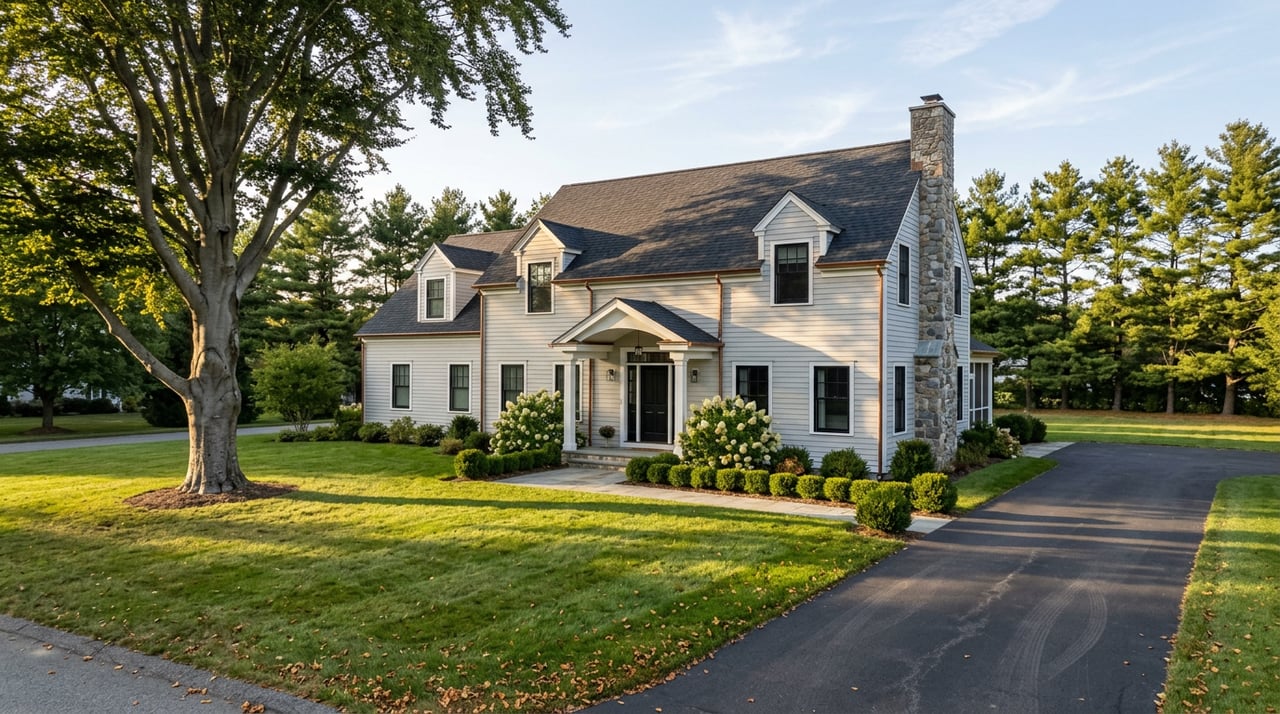
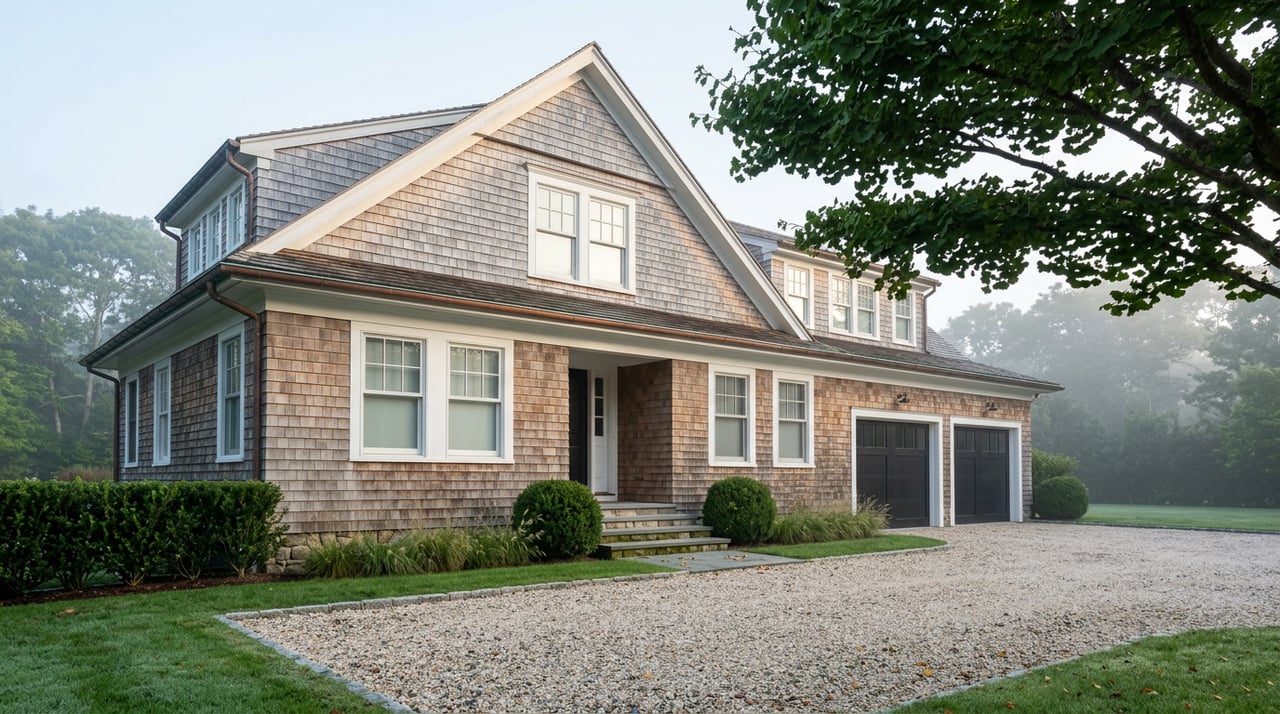
None of this touches Melville's established single-family streets in the way you might assume. Neighborhoods like Rollingwood, Strathmore Hills, and the gated communities of Country Pointe and The Legends Estates remain what they've always been: quarter-acre-and-up lots, colonials and capes, some served by the Half Hollow Hills Central School District and others by South Huntington. Nothing about the overlay district rezones those blocks or changes what kind of home you'd be buying there.
What changes is the number that gets reported alongside them. Once a few hundred new rental and condo units start closing and leasing, the blended median for "Melville" starts describing two very different products under one label: an established colonial on a quarter-acre-plus lot in a neighborhood like Strathmore Hills, and a new one-bedroom condo above a ground-floor bistro on Baylis Road. The spread you're already seeing across listing platforms this year, from a $950,000 trailing median in April to a $1.09 million asking median in August, is early evidence of that blending, not just normal seasonal noise.
If you're cross-shopping Melville against Dix Hills, Setauket, or another Suffolk County hamlet on median price alone, ask what's inside that median before you draw a conclusion from it. A hamlet with a stable, all-single-family housing stock will report a more consistent number year over year. Melville, for the next several years, will not, because it's actively adding a second housing category that didn't exist before.
A few questions worth asking before you rely on Melville's median for a side-by-side comparison:
None of this makes Melville a worse or better place to buy. It makes the number on the portal a less useful shortcut than it used to be, and a more useful one if you know what's inside it.
Will the new development raise property taxes on existing Melville homes? The stated goal of the overlay district is the opposite: to grow the tax base by converting vacant commercial parcels into taxed residential and retail use, which the town argues protects rather than raises the burden on existing single-family owners. That's the town's rationale as expressed by Supervisor Smyth, not a guarantee about any individual property's future assessment.
Does this mean home values in Melville will drop as more units come online? Not necessarily, and not in the legacy neighborhoods, which remain a different housing product. What it does mean is that the blended citywide median you see on any given listing platform will become a less precise stand-in for what a specific home on a specific street is actually worth, which is exactly why a conversation about the specific address matters more than the headline number.
If you're weighing Melville against another Long Island hamlet, or trying to figure out what a specific property inside or outside the overlay district is actually worth right now, Team Calderon can walk through the address-level details with you. Request a Free Home Valuation and we'll tell you exactly where your comparison stands.
This article is general information, not legal, tax or financial advice. Consult a qualified professional about your situation.
Stay up to date on the latest real estate trends.
We pride ourselves in providing personalized solutions that bring our clients closer to their dream properties and enhance their long-term wealth.