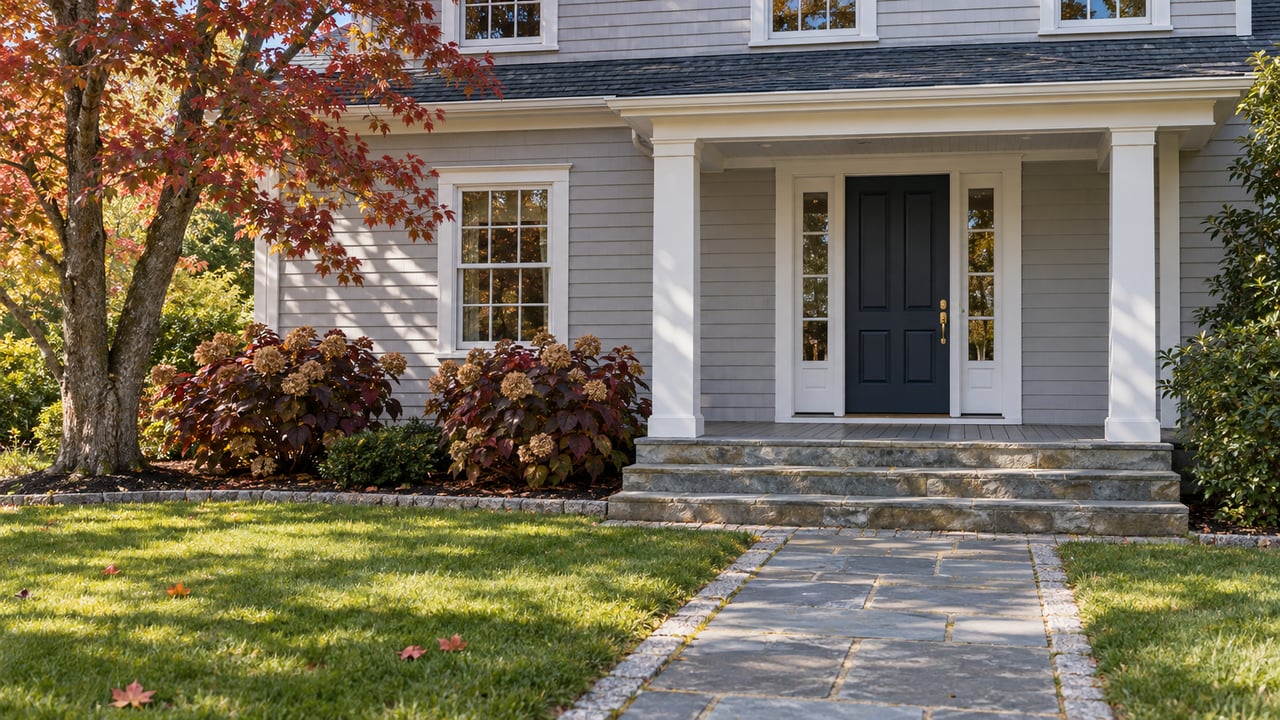
Stony Brook Harbor Was Once "Three Sisters Harbor." Head of the Harbor's Exhibit on Why Closes This Month
October 15, 2026
October 15, 2026
What did the water at the bottom of Harbor Hill go by before anyone called it Stony Brook Harbor? According to Preservation Head of the Harbor, it was "Three Sisters Harbor." The name came from an Indigenous farming practice that colonial surveyors copied into the earliest deeds.
That fact sits at the center of the group's 2026 exhibit, "Three Sisters: Landscapes of Head of the Harbor." It runs at Village Hall, 500 North Country Road, through Thursday, October 29. The exhibit's main point lines up with something you can see on a short drive around the village. Head of the Harbor became a village in 1928. The harbor name, the farm estate and the general store it lists among its cultural sites are all older than that.
The exhibit page explains the title directly:
"Three Sisters" stems from the traditional Native American agricultural practice of companion planting corn, beans, and squash together, which allowed each plant to support and contribute to the other.
According to the organization, early colonial surveyors and the original patents often took over existing Indigenous field names or described land by its farming qualities. As a result, "Three Sisters" shows up again and again in early deeds as a name for rich, farmable hollows. So the name describes good farmland, and it outlasted the farming that gave it meaning.
The exhibit follows that thread from the beginning to incorporation. It covers the Indigenous and other communities who lived here, George Washington's 1790 tour through the region, the farming traditions that supported local families, the changes of the Gilded Age, and the founding of the Village in 1928. It is also part of Suffolk County's 250th Anniversary Commemoration. That puts a small Village Hall show inside a much larger county program.
The group behind the exhibit is new. Preservation Head of the Harbor calls itself a volunteer nonprofit. Its work includes landmark nominations, speaking up for historic and cultural resources under threat, education, and partnerships. It became an incorporated nonprofit in June 2025, so this summer's exhibit came about a year after it formally organized.
The summer programs make the exhibit's scope clear. The series opened with a reception and talk on Wednesday, July 15. A Setalcott Nation presentation followed on Wednesday, August 12. The last talk on the 2026 schedule, about the Port Jefferson Railroad Branch, took place on Thursday, September 10. Starting with an Indigenous nation and ending with a rail line follows the same order as the exhibit, from who farmed this land to how the rest of the world reached it.
The organization's events page lists no talks after September 10. The exhibit page also doesn't give viewing hours or admission details. Call Village Hall before you go so you don't find the doors locked.
The exhibit lists Washington's 1790 tour as one of its chapters. His own diary records the stops on either side of this stretch of the North Shore. On April 22, 1790, he crossed the island by way of Coram to Setauket and spent the night at Captain Roe's house. The next day he left Roe's, stopped to water his horses at Widow Blidenberg's in Smithtown, went on to Huntington to dine at Widow Platt's, and spent the night at Mr. Young's in Oyster Bay.
The diary doesn't name a stop inside what is now Head of the Harbor. A 2024 brochure from the Manhasset Public Library's history center describes the Setauket-to-Smithtown leg as about 10 miles heading northwest, with the horses watered at Widow Blidenberg's. It doesn't place a stop in modern Head of the Harbor or St. James either. What the record does show is that his April 23 ride ran between Setauket and Smithtown, and the exhibit counts that ride as part of the village's past. The diary is free to read on the National Archives' Founders Online site. It's a good thing to read before your visit.
The Village of Head of the Harbor's community links page lists two cultural sites with St. James addresses. One is Deepwells Farm and the other is the Saint James General Store. Both appear on Suffolk County Parks' list of historic sites, and the county says the store sits inside the boundaries of Deepwells Farm Historic Park. They line up closely with the exhibit's chapters on farming and the Gilded Age.
Here is how the sites compare by date:
The General Store was open 71 years before the village existed. Deepwells is 83 years older than the village.
Suffolk County describes Deepwells as a 19th-century Greek Revival farm estate. That makes it a surviving piece of the farming chapter the Three Sisters exhibit tells. This month it also hosts a haunted house. The Deepwells Haunted Mansion is run by the Deepwells Farm Historical Society, and its 2026 show is called "The Last Masquerade of 1913."
The storyline is a fictional masquerade thrown by a New York City mayor at his Long Island summer home on an autumn night in 1913. The historical record is smaller. Gaynor, a real mayor, is listed among Deepwells' residents, and his term ended with his death in 1913. The show starts in the cigar parlor, where each guest gets a mask. It moves through the dining room and ballroom, up the grand staircase into 14 rooms on two floors, and then outside to a corn maze, wooded trails and a "Graveyard of the Undead."
The practical details:
Suffolk County says the St. James General Store was built by Ebenezer Smith in 1857 and calls it the oldest continuously operating general store in the United States. According to the county, its shelves once held fabric, kitchenware, medicine, shoes, horse medicine, tobacco, groceries and hardware. That's the stock a farm community like the one in the exhibit would have needed. Today the shop mixes Victorian-era artifacts with things for sale, and it still has a post office substation.
The store's county page lists it at 516 Moriches Road, open seven days a week from 10 a.m. to 5 p.m. The county mentions weekend interpretive programs and seasonal or holiday celebrations, but the page gives no holiday schedule. Last year the county held photos with Santa at the store on December 6 and 7, 2025, and a tree lighting at Deepwells on December 6, 2025. Check the county's parks news page for this year's dates.
You can see all of this in one weekday and one evening. The General Store opens at 10 a.m. daily. The Three Sisters exhibit stays at Village Hall through October 29, but call ahead for hours. On Friday, October 16, Deepwells opens its doors at 7 p.m. In that order, the day starts with an 1857 store built to supply farmers, moves to the farming story behind the harbor's first name, and ends at an 1845 estate that this October is staging a party set in 1913.
After October 29 the exhibit panels come down. The deeds, the diary and the two buildings remain.
Many homes around Head of the Harbor have long histories of their own: an old farm boundary, a Gilded Age owner, a road Washington rode near. When it's time to understand what that history and the house's condition mean for its value today, Kenny Calderon and Team Calderon combine local knowledge with construction-management insight to give you a clear answer. Get a Free Home Valuation and start with a conversation about your property's story.
Stay up to date on the latest real estate trends.
We pride ourselves in providing personalized solutions that bring our clients closer to their dream properties and enhance their long-term wealth.